2026 Summer Loads and Resources Assessment Overview

Summary
The California Independent System Operator (ISO) 2026 Summer Assessment shows sufficient energy to meet a wide range of conditions throughout the upcoming summer driven by continued procurement and onboarding of significant amounts of new resources. While the grid is stronger than ever, extreme, region-wide heat events and wildfires continue to pose risks to system reliability during the hottest months.
Key findings
Our latest analysis highlights more significant strides in grid readiness and power availability:
- Rapid Capacity Growth: From September 1, 2025, through April 1, 2026, about 2,127 MW of new resource adequacy eligible nameplate capacity was added to the grid, and we expect to onboard an additional 6,194 MW by June 30, 2026. Capacity additions include the new SunZia wind project, with the ISO’s share making up approximately 3,167 MW of wind energy from New Mexico.
- Reliability Surplus: Under industry standard planning targets, the grid shows a healthy surplus of 2,547 MW. This means we are well-equipped to handle normal summer conditions without calling on emergency measures.
- Strong Emergency Reserves: If extreme conditions strike, we have access to roughly 3,379 MW of emergency supply through the state’s Strategic Reliability Reserve and emergency assistance via imports.
- Battery Storage Boom: Since 2020, we have added more than 16,000 MW of battery storage, which plays a vital role in meeting peak demand during hot summer evenings when solar power dips.
Projected demand vs capacity
To keep the lights on, we constantly balance how much power people need with how much is being produced. Energy demand is growing, with peak forecasts expected to have a 50% chance of reaching above 46,844 MW in 2026 to 52,940 MW by 2030.
To meet this rising demand, we rely heavily on new energy resources. Between April 1 and June 2026 alone, we expect to integrate 6,194 MW of new installed capacity. This includes:





Existing and new resource modeled capacity for all Resource Adequacy eligible resources
Probabilistic assessment
- The ISO assessed if the sufficiency of the resources that are already eligible for Resource Adequacy (RA)—along with resources expected to be available by June 30, 2026—will meet a range of plausible renewable, load and outage conditions.
- The review checked whether these resources meet the industry standard that the power system should experience no more than one supply shortage event every ten years due to not having enough resources by running a probabilistic study that simulates 500 different full year scenarios, with hourly detail.
- This study looks at the need to use emergency actions, not actual customer outages. The study does not include rare extreme emergency events.
- Looking ahead to summer 2026, the results show that the system has more resources than is needed to handle a wide range of uncertainty in demand, renewable output, and outages. The analysis shows a surplus of 2,547 megawatts above what are needed to meet the “once-every-ten-years" supply shortage event reliability standard.
Loss of load hours across 500 samples
Base portfolio
Portfolio calibrated to one supply shortage event every ten years - 2,547 MW surplus
Multi-hour stack analysis
- A simplistic visualization of hourly loads and resource contribution analysis was also performed to analyze the hourly reserve margin for the expected Resource Adequacy (RA) eligible fleet. This approach focuses on a reasonable expectation of resource availability during every hour of the peak day in each of the summer months.
- The multi-hour stack assessment of this fleet indicates an 'achieved planning reserve margin (PRM)' of 30.8 percent in the tightest hour.
- The PRM required to meet a "once-every-ten-years" shortage supply event is 25 percent, calculated by subtracting the surplus capacity of 2,547 MW (as determined in the probabilistic study) from all available resources.
- The resource stack is also compared against the load-weighted average PRM of 17.5 percent across all ISO load-serving entities for the 2026 resource adequacy year.
May 2026 all Resource Adequacy eligible portfolio for peak day
Risks and mitigation
Risk factors
While standard models show a stable summer, they do not account for severe, unpredictable emergencies. We are closely tracking several threats that could strain the grid:
- Extreme Heat Events: Weather forecasts show a high chance of above-normal temperatures across the Western United States from June through September. Widespread heat waves increase air conditioning use and strain the entire regional power network.
- Wildfires: Active fire seasons can threaten transmission lines and force power plants to shut down unexpectedly.
- Severe Drought: Although the state’s reservoirs are at or above historical averages for this time of year, low snow melt this spring could reduce the amount of electricity we can generate from hydroelectric sources as we move into summer.
Mitigation strategies
The ISO works closely with state agencies, utilities, and regional partners to protect power supply through several proactive measures:
- Strategic Reserves: The Electricity Supply Strategic Reliability Reserve Program (ESSRRP) secures backup power plants for emergency use, as do voluntary load-reduction programs.
- Extreme Weather Playbook: Working with our state partners, we continually update our operational playbook. This guide dictates exact steps, communication protocols, and rapid-response actions to take before and during a severe grid event.
- Proactive Maintenance: We actively manage power plant maintenance schedules to ensure all available generators are online and ready during the critical summer months.
- Continuous Integration: We support the ongoing approval and construction of new renewable energy and battery projects to keep expanding our safety margin.
Weather outlook
Weather conditions such as temperatures, cloud cover, and precipitation have an impact on variables affecting the ISO market and system operations including hydro production, the availability of renewable resources, and load levels. During summer, temperature is a key driver of load conditions, especially when there are extreme and widespread heat events.
As is usually the case in California and the West, the summer will be hot.
Seasonally driven climate signals are indicating potential for another hot period for California and the West for summer 2026.
Despite some areas of above normal rainfall for the state during the winter months, relatively low snowfall led to below normal snowpack across the state. A very warm, dry March further reduced snowpack values, with some stations reaching all-time lows.
- Major reservoir levels state-wide are at or above historical averages for this time of year but due to the lack of snowpack, there will be minimal snow to melt and maintain the reservoir levels through summer.
- After an abnormally warm winter and March, the outlook for summer looks to be more of the same. Forecasts indicate a warm start to summer across both coastal and interior California regions.
- Warm sea surface temperatures along the coast will bring increased potential for a hot coastal summer as well, compared to the milder weather of recent summers.
- During fall, forecasts continue to show above-normal temperature potential across the West. Higher chances for increased above-normal temperature risk are in interior California, the Pacific Northwest, and the Intermountain West.
Seasonal temperature outlook - June, July and August 2026
Issued: April 16, 2026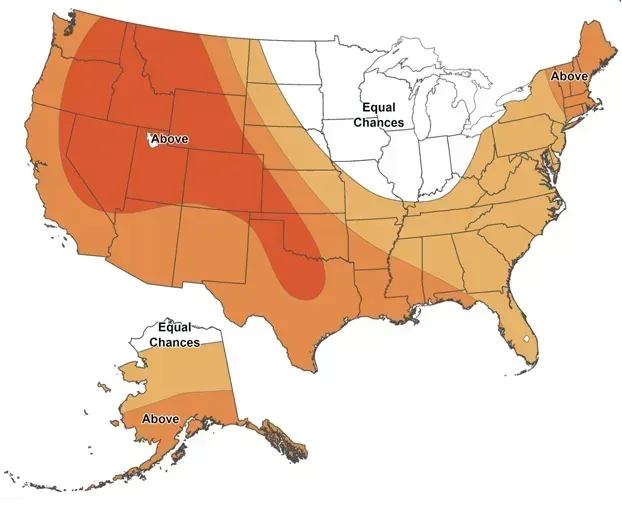
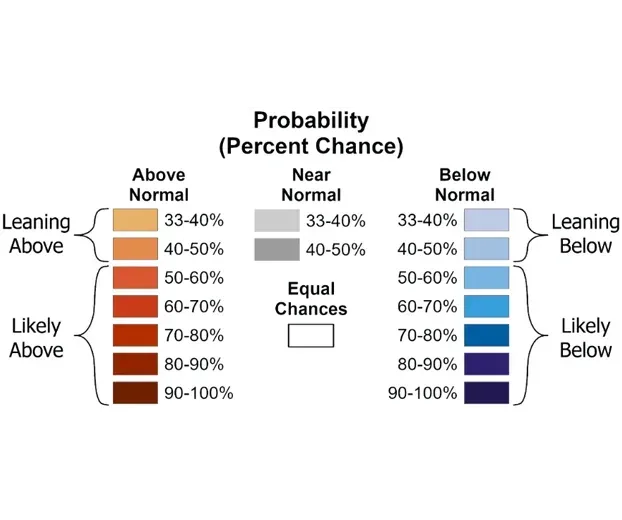
Seasonal precipitation outlook - June, July and August 2026
Issued: April 16, 2026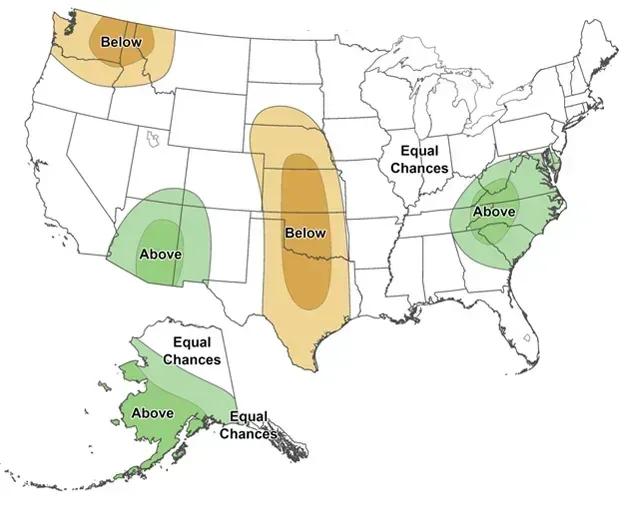
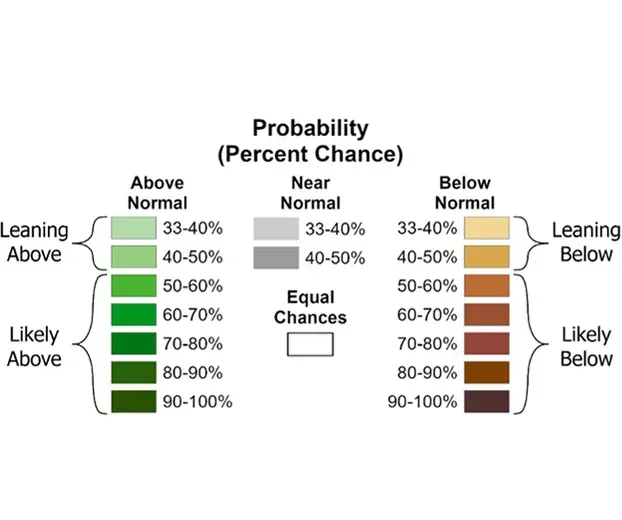
Multi-model probability forecast for temperature, June, July and August 2026
Issued: April 2026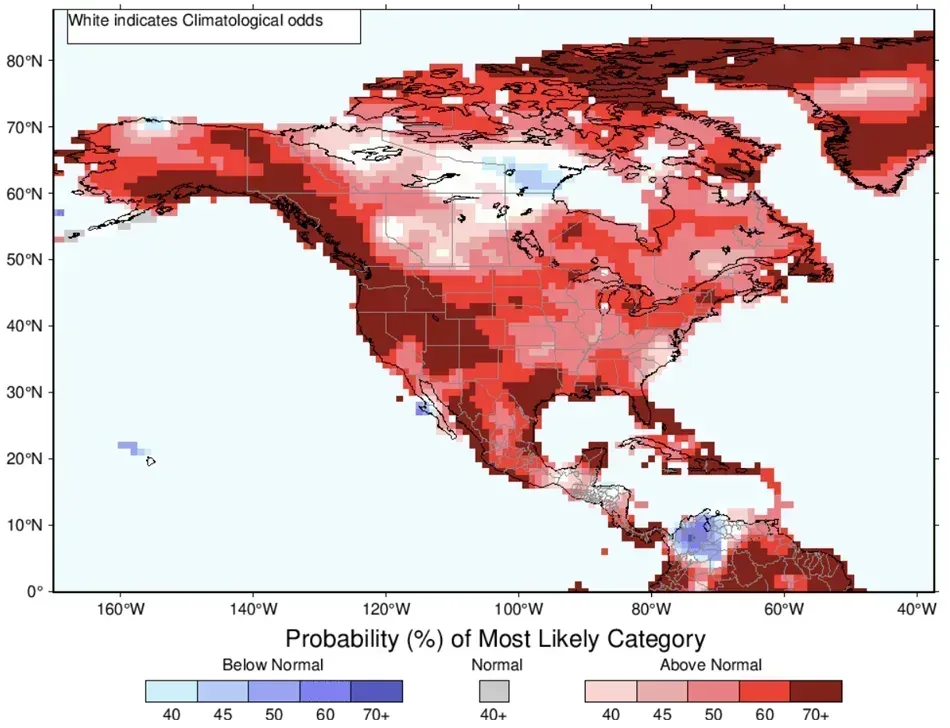
Multi-model probability forecast for precipitation, June, July and August 2026
Issued: April 2026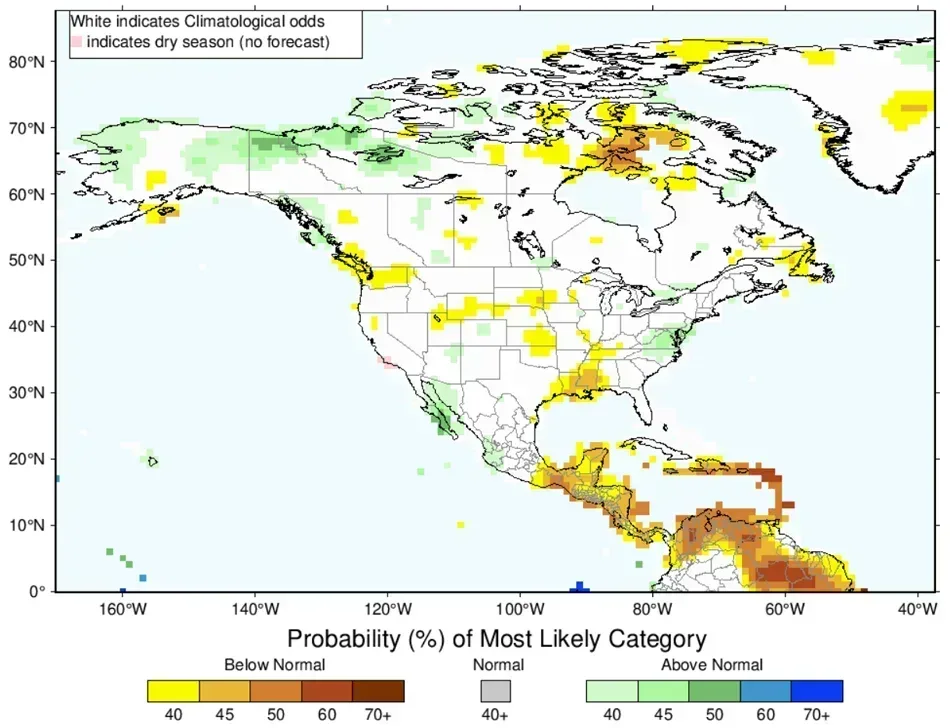
Preparation for
summer operations
- The ISO, state entities, and stakeholders have employed a wide range of contingency measures to continue to improve system preparedness and performance. These include pursuing and approving procurement of additional resources, ensuring existing resources are retained in service; managing planned maintenance; and improving operational coordination, communication and planning around resources or load reductions accessible under stressed grid conditions.
- The ISO coordinates closely with California state agencies, utilities, and regional partners on summer readiness activities. These efforts include reviewing and updating the ISO’s Extreme Weather Event operational playbook, which outlines processes, potential operational actions, and communication protocols in advance of and during a potential grid event.