2026 Stakeholder Symposium looked to the energy future
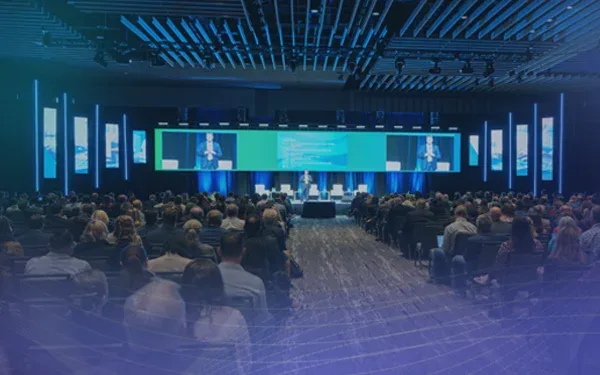
While much of the West experienced an October heat wave, the participants were lively at the 2026 Stakeholder Symposium. The focus of the event was looking to the future of the energy industry, both technologically and policy-wise.
The Symposium got underway with Joe Eto, Chair of the California ISO Board of Governors, and Andrew Campbell, Chair of the Western Energy Markets Governing Body. We got a glimpse of the variety of topics impacting our industry that would be covered: governance; data centers and the continued electrification of homes, transportation, factories, how AI will come into play; and so much more.
CAISO President and CEO Elliot Mainzer joined the others onstage, welcoming people from across the country and the world who filled the room with interest and enthusiasm and giving a quick overview of what lay ahead for attendees.
Keynote remarks focus on the future
The keynote speaker this year was Federal Energy Regulatory Commission (FERC) Commissioner Judy W. Chang. Her words of encouragement for the industry’s future were bright and brought a hopeful tone to the Symposium. We are “building the blueprint for a clean, reliable energy future,” Chang said. Advancements in technology, she added, can and will lead to better energy resiliency in the face of challenges like natural disasters, wildfires, droughts, and more.
Chang didn’t shy away from areas that need improvement. Her examples included the need for ratepayer group representation at the front end of transmission and cost allocation planning, as well as transparent processes for project development. Overall, her keynote garnered nods of agreement from the audience.
A look at the launch of EDAM
The start of the Extended Day-Ahead Market (EDAM) has been a hot topic this year around the industry. PacifiCorp began participation in EDAM in May, and in October Portland General Electric (PGE) came online. The first panel of the day included Mainzer chatting with several key players in the newly launched market to get their perspectives on the experience.
“It’s been totally boring, and that’s great!” Maria Pope, President and CEO of PGE, said jokingly about their smooth onboarding in October.
By learning from the experiences of PacifiCorp, it made the whole process “textbook,” Pope said. She also noted that PGE is already seeing positive impacts on reliability—working across jurisdictions and utilizing technologies that have led to benefits for customers.
One interesting question from Mainzer was how EDAM fits into participants’ broader corporate strategies.
“I think from my perspective, our broader corporate strategy is really getting back to basics,” said Ryan Flynn, President of Pacific Power. Flynn pointed out that PacifiCorp is focused on delivering affordability and reliability for their customers. “And that's what EDAM does.”
The panelists also included Mike Wilding, Vice President of Energy Supply Management with PacifiCorp. He agreed with the other panelists that the overall EDAM onboarding experiences were smooth. The group was frank about the few challenges encountered, such as the initial issues related to settlements, but agreed that everyone involved worked fast and changes were fixed promptly.
The road to ROWE
The next session focused on the newly formed Regional Organization for Western Energy (ROWE). The diverse group of panelists discussed key transition milestones they are looking forward to in the next 18 months, the governance framework that is already in place, and what the overall evolution of the ROWE may be. The lively discussion was moderated by Kathleen Staks, President of the ROWE Formation Board of Directors and Executive Director of Western Freedom.
Of particular interest to many in the audience was the question of how CAISO will work with the new ROWE on a day-to-day basis. The consensus across the panel was there will need to be a specific framework laid out to handle all the transitions and changes.
"We're asking [CAISO] to divert the way they've done business for the last 20-some-odd years and think how we would do that in the future that would engage the rest of the West. They've been a great partner in helping us get there and I really appreciate [their] willingness to do that," said Jim Shetler, a member of the ROWE Formation Board and General Manager of BANC.
Power shifts: looking to the future
After a networking lunch break, participants came back for an afternoon filled with a range of discussion topics about the future. From AI in grid management, to large loads and flexible demand, to the role of stakeholders in the market process.
New to this year’s symposium was Power shifts: Short talks on big change. These shorter sessions felt more charged due to their shorter time limits and subject areas. First, Josh Wong, Founder and CEO of ThinkLabs, came out to talk about AI. When explaining the concept of three layers to AI and how they can be used in grid planning, management, and markets, he used Star Wars and Marvel universe analogies (Jarvis, Master Yoda, Doctor Strange). Humor aside, these analogies gave a better picture of just how intricate AI agents’ usage for the grid can be.
Another hot topic was large loads and infrastructure. Jason Glickman, Executive Vice President of Strategy and Growth with PG&E, highlighted the interconnectedness of technology and the state’s economy.
“I think we are at an inflection point at this moment right now when we look at the growth and the opportunity in front of us, it’s unprecedented,” he said. Glickman also acknowledged there are many factors at play when it comes to large loads, including policy, financial, and the customer backlash against AI in general.
Success through partnership: Building the future together
CAISO’s success is built around collaborative partnerships with its stakeholders. Joanne Serina, CAISO’s Vice President of Stakeholder Engagement and Customer Experience, led a discussion about how these partnerships have made advancements in the past, and what the hopes are for future stakeholder engagement.
Overall, there was a sense of pride in the collaboration between stakeholders and CAISO.
“I think we do share a common goal, all of us here,” Beth Vaughan, CEO of the California Community Choice Association, said, again bringing up the collective cooperation of stakeholders in working to achieve both reliability and affordability in the energy sector.
Keeping with the spirit of the conversation, Serina asked each panelist what they would like to see from CAISO over the next five years. Mariella de Jong, Senior Vice President of Commercial Management with Pattern Energy, summed it up with “open-mindedness”.
“As I look at where we are right now from a power markets perspective, we are in a very fluid and dynamic environment,” said de Jong. “I would like to see…continuing to be open-minded to new ideas, continuing to really help companies navigate the complexity, to innovate, and to be creative around us.”
Looking at the next Five Years
Before the final session, Oregon Public Utility Commission Chair Letha Tawny presented Cottie Petrie-Norris, Chair of the California State Assembly Committee on Utilities and Energy, an award thanking her for working to secure passage of California Assembly Bill 825. The legislation, signed last year by Gov. Gavin Newsom, enables CAISO and California utilities to take part in energy markets overseen by the independently governed Regional Organization for Western Energy.
“The passage of AB 825 really was the culmination of decades of work from an incredible wide-ranging team of people,” Petre-Noris remarked. “Landing this plane was incredibly important for California, for the West, and for ensuring long-term reliability, affordability, and sustainability.”
Just as the Stakeholders panel ended with a question about the years ahead, the Symposium wrapped up with a presentation on the future of CAISO, with a sneak peek at its next 5-year Strategic Plan due out early next year.
Looking back at the 2022-2026 plan, Mainzer said, “It really has served as our roadmap to meaningful achievements together since 2022, and I think they’re worth reviewing.”
The panel of CAISO staff from multiple departments previewed what will be addressed in the new plan, including operational enhancements, resource adequacy and transmission planning, market expansion and governance, stakeholder engagement and customer service, leadership development and employee engagement.
The energy future looks bright
Overall, the 2026 Stakeholder Symposium was hopeful and future-leaning, and pragmatic about the challenges ahead. Participants came away with new insights into the future of CAISO and the ROWE, and the energy industry at large.
Thank you to all of the sponsors, panelists, and attendees for this participation in this year's Stakeholder Symposium. Watch each of the panels in their entirety on CAISO’s YouTube channel.