Summer Assessment confirms continued strengthening of the grid; with additional resources improving overall reliability

With the continued procurement and onboarding of significant new resources, the ISO-managed electric grid is well positioned to meet a wide range of operating conditions during the upcoming summer.
The ISO’s 2026 Summer Loads and Resources Assessment posted on our website today indicates a surplus of capacity of 2,547 megawatts (MW) relative to what is needed to meet the 1‑in‑10 loss‑of‑load expectation criteria, which in this context means no more than one event every ten years where insufficient resources require emergency measures to balance supply and demand. Beginning with the end of May, we will also be able to compare monthly results of the Summer Assessment to the actual resource adequacy showings and available contracted capacity data.
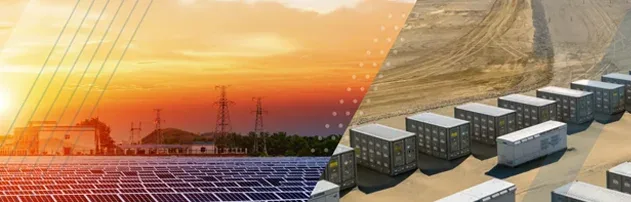
Through close coordination with the state’s primary energy agencies and utilities, the ISO has onboarded more than 30 gigawatts (GW) of new resources since 2020. Our analysis is based on installed eligible resource adequacy capacity. Capacity added from Sept. 1, 2025 through April 1 combined with that projected to be added by June 30 includes 1,744 MW of solar, 3,467 MW of wind (including the ISO’s share of SunZia), and 3,107 MW of battery storage.
While sufficient capacity is available to meet expected summer demand, risks do remain. Abnormally dry conditions, increased wildfire risk, and the potential for extended, widespread heat events and related disruptions could challenge grid operations as the season progresses.
Following an abnormally warm winter and a hot start to spring, the ISO’s latest climate outlook indicates that long‑term climate signals point to the possibility of another hot summer across California and the broader Western region. Above‑normal temperatures are expected throughout the West for June, July, and August, with the strongest signals over the interior West and Pacific Northwest. Warm coastal sea surface temperatures also increase the likelihood of a hotter‑than‑usual coastal summer, in contrast to the milder conditions observed in recent years.
Despite pockets of above‑normal winter precipitation, low snowfall resulted in below‑average snowpack statewide. Subsequent extreme heat in March rapidly diminished remaining snowpack across the Sierra Nevada, with some locations experiencing record lows. Although major reservoir levels are currently at or above historical averages for this time of year, limited snowmelt will reduce the ability to sustain those levels through the summer. As a result, hydroelectric availability is less robust than desired; however, these resources can be managed proactively to ensure they are available during critical periods.
Another potential uncertainty for summer reliability is the pace of new load energizations. The projected surplus could narrow if these occur faster and at a greater scale than assumed in the state’s 2025 Integrated Energy Policy Report planning forecast known as IEPR.
Overall, we are cautiously optimistic about the summer given our additional resources. Reliability has also been strengthened across California and the West due to the transfer of energy enabled by the real-time Western Energy Imbalance Market and now the new Extended Day-Ahead Market that began operations on May 1.