ISO 2025 Year in Review: Powering forward on reliability, shared progress, and a new framework for independent market governance
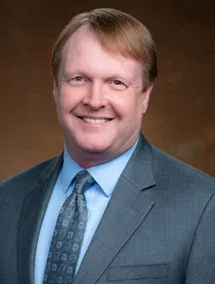
With 2025 drawing to a close, I am pleased to report that the California Independent System Operator (ISO) has had another year of significant progress on the key goals in our 2022-2026 Strategic Plan. By collaborating with our partners in state government and across our markets, the ISO and the grid we manage today are more resilient and better equipped to accommodate extreme conditions and the growing demand for electricity.
Throughout the past year, while continuing to follow through on the Strategic Plan’s five over-arching objectives, collectively we have:
Completed additional upgrades in our ongoing Control Center Modernization initiative, including an innovative pilot program using artificial intelligence to manage planned equipment and infrastructure outages and maintenance.
Maintained solid reliability throughout the year while successfully onboarding another 5,713 megawatts (MW) of additional capacity as of December 1, 2025. That includes 4,260 MW of battery storage that has helped meet summer peak demand.
Advanced major interconnection reforms while also securing approval from the ISO Board of Governors of another 31 transmission upgrades. The upgrades include cost-effective grid-enhancing technologies such as reconductoring that increase system capacity at lower cost than new lines.
Made significant strides toward next year’s launch of the Extended Day-Ahead Market, including several key policy initiatives, market simulation, and advanced training for participants and Western regulators. At the same time, the Western Energy Imbalance Market continued to produce impressive cost savings for participants and their customers.
Provided technical support to the West-wide Governance Pathways initiative, helping advance near-term enhancements to market governance as well as successful legislation in California establishing a framework for independent governance of Western electricity markets.
In addition to enhancing the stakeholder process, the ISO completed 23 high-priority initiatives, including seven that were unplanned, demonstrating our ability to be flexible and responsive to stakeholder needs. We also hosted a number of well-attended EDAM implementation training sessions.
Together, these and other notable accomplishments made 2025 a highly productive year for the ISO and the many entities with whom we collaborate.
Strategic Objective 1
Reliably and efficiently integrate new resources by proactively upgrading operational capabilities
Better tools, enhanced training, and more efficient operations enable grid operators to maintain system reliability in normal and stressed conditions. In making more progress on this strategic objective in 2025, we have enhanced core control room software, data and operator tools, which have improved situational awareness and strengthened reliability.
In 2025, we also entered into an innovative collaboration with Open Access Technology International (OATI) on an artificial intelligence pilot project. The pilot leverages the advanced capabilities of large language models, such as the one powering ChatGPT, to enhance management and coordination of planned maintenance requests for grid assets.

Our comprehensive Data and Analytics strategy is designed to support the successful adoption and scaling of artificial intelligence across the organization where we know it can be helpful.
Additionally in 2025, the ISO expanded training and emergency operations space in our Folsom headquarters. We now have a 100-seat training room with 48 workstations and a simulator with 18 operator consoles. Our training team oversees the development and delivery of at least 30 weeks of training per year for more than 100 operators, engineers and other employees. This year, ISO training sessions attracted more than 2,500 participants.
This past February, we reorganized the Grid Operations and Infrastructure and Operations Planning teams to improve efficiency and strengthen partner trust by clearly separating market operations from balancing area functions. The restructuring reinforces our evolving role as a market service provider while maintaining high quality and impartial service as California’s largest balancing authority.
Strategic Objective 2
Strengthen resource adequacy and meet California’s SB 100 goals through long-term transmission planning and effective coordination with state agencies
Adding more resources to the grid in 2025 has made the system stronger and improved reliability. The 5,713 MW of additional capacity onboarded this year is enough power to serve about five million homes. Working closely with our partners in state government, the summer of 2025 marked the third in a row that grid operators kept the system balanced during heat waves and wildfires without a single Flex Alert asking consumers to “flex” when and how they use electricity to balance supply and demand.
In addition to adding resources, we took significant steps in 2025 to streamline and remove friction from our interconnection queue process, including:
- Implementing a system of scoring and filtering of projects to be studied, ultimately reducing the number of applications in Cluster 15 from an unmanageable 541 applications representing 347 gigawatts (GW) to 145 interconnection applications representing approximately 68 GW. Those 145 projects received their initial study results in November, on schedule.
- Designing and implementing an “intra-cluster prioritization” process to enable Cluster 14 and earlier queued projects to proceed to the extent capacity is available, rather than having to wait for upgrades that would enable everyone in a cluster to proceed simultaneously. A draft final proposal has been posted for refinements based on the ISO’s Cluster 15 implementation experience, to be in place for Cluster 16 opening next fall.
At the same time, the ISO’s 2024-2025 Transmission Plan, drafted in close consultation with state energy agencies and approved by the Board of Governors in May, recommended 31 transmission upgrades for a total infrastructure investment of an estimated $4.8 billion at buildout.

The plan is driven in large part by the need to reliably supply the increase in forecasted demand related to electrification, particularly in the Greater San Francisco Bay Area, and to address load growth from data centers and electric vehicle use. The plan also included five reconductoring projects that use advanced conductors to add transmission capacity without having to incur the cost of new lines.
We expect to have another significant transmission upgrade shortly with the addition of the new SunZia transmission line. The line, which was developed under the ISO’s innovative Subscriber Participating Transmission Owner model and will soon be turned over to ISO operational control, includes a 551-mile, ±525kV HVDC and 345kV HVAC transmission system connecting to a 3,600 MW wind project in New Mexico.
Strategic Objective 3
Build on the foundation of the Western Energy Imbalance Market to further expand Western market opportunities
Expanding market opportunities as the best way to boost reliability and cost savings was again the focus of major activity as we get closer to next year’s launch of the Extended Day-Ahead Market (EDAM).
Among other actions, we introduced EDAM implementation workshops as a new forum to guide stakeholders through the mechanics and design of significant market functionality changes. Key topics included intertie scheduling changes for non-EDAM balancing areas, resource adequacy imports, and enhancements to the Congestion Revenue Rights (CRR) model for monthly and annual markets. Through these sessions, we have fostered strong collaboration with stakeholders, deepened understanding of trading implications, and developed strategies to minimize impacts on market participants to ensure a smoother and more efficient transition.
This summer, we received additional validation of the EDAM design when the Federal Energy Regulatory Commission (FERC) issued three separate orders approving key parts of the ISO’s plans in a single day, August 29. Two orders approved tariff changes requested by PacifiCorp and Portland General Electric, allowing them to join EDAM in 2026. The third approved ISO tariff revisions on congestion revenue allocation in the new market that were put forward in an expedited initiative requested by stakeholders. While the ISO will continue working with them on a long-term congestion revenue approach, these approvals provide important support for the market’s launch next year.
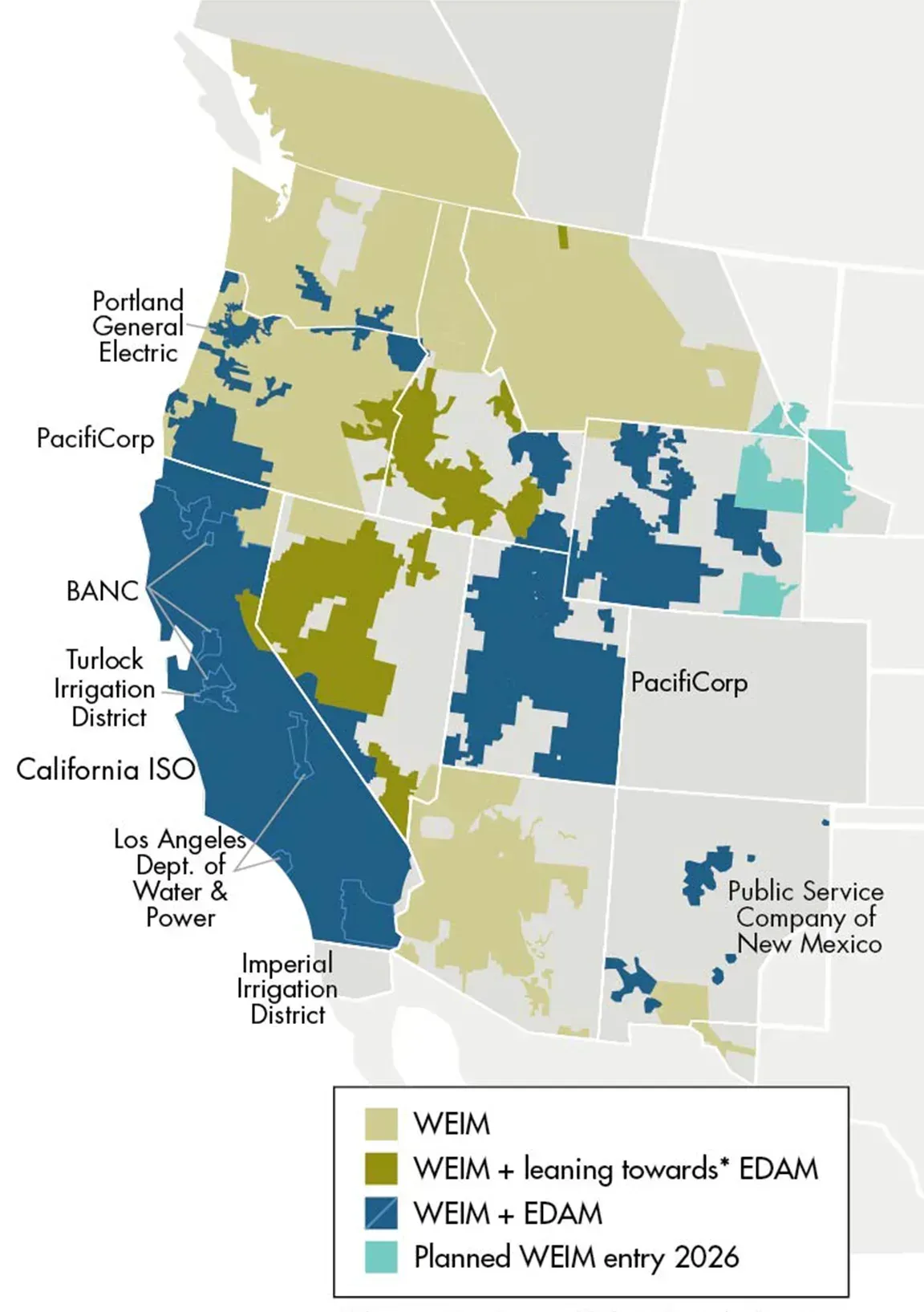
In 2025 FERC also accepted an agreement between the ISO and the Imperial Irrigation District to join the Western Energy Imbalance Market (WEIM) and EDAM in October 2028. In October, NV Energy submitted its formal request to the Public Utilities Commission of Nevada to join EDAM in 2028. As of December 1, the lineup for entities committing to join the new market represents 42% of the Western load:
- PacifiCorp – 2026
- Portland General Electric – 2026
- Public Service Company of New Mexico – planned entry 2027
- Balancing Authority of Northern California – planned entry 2027
- Los Angeles Department of Water and Power – planned entry 2027
- Turlock Irrigation District – planned entry 2027
- Imperial Irrigation District – planned entry 2028
Our Market Design and Analysis team also advanced a number of other important policies to serve participants in our markets, including a multi-jurisdictional greenhouse gas emissions reporting proposal broadly supported by stakeholders. The team also secured approval for extended market functionality beyond the scheduled sunset of Assistance Energy Transfers, which offers WEIM participants additional reliability tools during strained conditions.
The real-time market also had another strong year of cost savings and other operational benefits for participants. In its third quarter benefits report, the WEIM reported $412 million in savings for market entities, pushing total cost savings since the market’s start in November 2014 to $7.82 billion. That same report also showed that the WEIM has now helped participants avoid emissions of more than 1.12 million metric tons of CO2 since its launch, roughly equal to emissions from 236,276 passenger cars driven for a year.
A framework for independent markets governance.
Throughout 2025, the ISO provided key technical support to the West-wide Governance Pathways Initiative that helped establish a new framework for independent governance of Western electricity markets. In April of this year, following approval of Step 1 of the Pathways Initiative by both ISO governing bodies in 2024, Step 1 was also approved by the Federal Energy Regulatory Commission. On July 1, this step was activated when the Public Service Company of New Mexico announced it would join EDAM, moving the primary decisional role on Western energy markets to the Western Energy Markets Governing Body.
In late 2024, the Pathways Initiative Launch Committee approved Step 2 of its proposal, which was followed by overwhelming support in the California Legislature for Assembly Bill 825 (AB 825). It was approved by a combined vote of 101-2 and signed by Gov. Gavin Newsom in September. Inspired by the Pathways initiative, AB 825 creates a roadmap for transitioning Western energy markets governance to an independent regional organization, effective as soon as January 1, 2028, if certain requirements are met.
April 2025:
Step 1 approved by the Federal Energy Regulatory Commission
July 2025:
Step 1 activated when Public Service Company of New Mexico announced joining EDAM.
July 2025:
Step 1 activation moved primary governance role to WEM Governing Body
September 2025:
Step 2 of Pathways Proposal gained approval by the CA Legislature with AB 825 and then signed by Gov. Gavin Newsom.
January 2028:
If certain requirements are met, it would transition the governance of Western Energy Markets to a new independent regional organization.
The ISO will continue management of the grid, including its role for transmission planning and generation interconnections as a California balancing authority. The new regional organization will govern market rules and honor each state’s energy policy independence. A geographically wide and robust market footprint will facilitate greater sharing of diverse resources and optimize an increasingly interconnected transmission network in more cost-effective ways, saving billions for market participants and their customers.
Strategic Objective 4
Provide highly responsive and inclusive stakeholder engagement and customer service
Stakeholder engagement and customer service are central to everything we do at the ISO. As such, we continued to enhance our stakeholder process and working group design this year in response to feedback from our community in the 2024 Western Energy Markets Regional Issues Forum (RIF) survey. Among other advancements, we developed “evergreen” trainings to help stakeholders prepare for policy initiative discussions, launched “At a Glance” documents highlighting all initiative milestones and brought more outside experts into policy discussions for additional perspectives. We also collaborated with the RIF as it developed a proposal to enhance its role and the role of stakeholders in several policy initiative processes.
Enhanced stakeholder process and working group design
Developed “evergreen” trainings to help stakeholders prepare for policy initiative discussions
Launched “At a Glance” documents highlighting all initiative milestones
Hosted more outside experts into policy discussions for additional perspectives
Developed a full EDAM training curriculum
In support of EDAM implementation, we completed the development of a full EDAM training curriculum including both a self-paced computer-based training suite and instructor-led training modules, all of which were very well attended. We also have implemented a new EDAM Scheduling Certification process for scheduling coordinators who intend to become EDAM certified. Over the course of the year, the ISO hosted 142 stakeholder meetings, with approximately 12,300 participants. These stakeholder policy meetings played a key role in getting approval from the Board of Governors and Western Energy Markets Governing Body on 15 separate initiatives. A total of 24 initiative have been completed in 2025.
Also, in September, the ISO delivered a customized Western Energy Markets training for the Body of State Regulators, which includes public utility commissioners and commission staff from across the region. In what has become an annual event, this session drew 54 participants and focused on the fundamentals of the Western Energy Imbalance Market and Extended Day-Ahead Market, with practical, relevant content tailored to their needs. The training sparked lively discussion and Q&A, and feedback from attendees highlighted that it was time well spent and deeply appreciated.
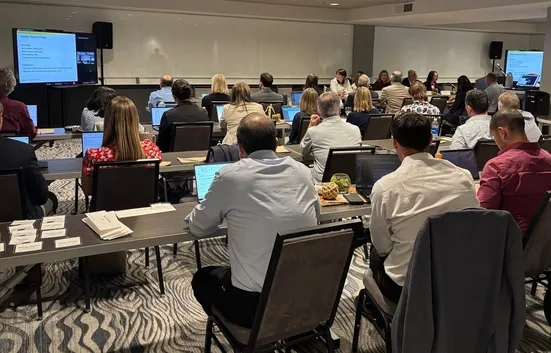
Engagement with stakeholders across the West for summer and winter readiness again proved to be highly beneficial in the communication and collaboration between entities throughout the summer peak season and as we continue to prepare for this winter.
Improving customer inquiry responsiveness and data transparency for customers has also been an ongoing focus throughout 2025, with significant improvements in our response time to customer inquiries and enhancements to our OASIS system for improved bulk data download of historical OASIS data.
Because there is considerable interest in the work we do, the ISO also hosted more than 101 tours of the Folsom campus in 2025, including 17 with visitors from foreign countries.
Growth and continuous improvement have also been driving a refined communications strategy at the ISO. In 2025, we implemented a new outreach strategy to improve coordinated communications with Western energy market participants through regular meetings and touchpoints with industry counterparts and the launch of a newsletter and information toolkit to increase alignment and reduce confusion as we approach EDAM activation. The effort to elevate our communications approach also extends to our social media channels, which have grown to include new platforms like Bluesky, Instagram, and Threads. These efforts help us reach new audiences and improve audience optimization so more people can find us during an online search. This year our communications team added a Digital Content Creator with the goal of increasing our use of video content, which receives greater engagement online. We look forward to doing more short-form video for social media and launching an industry podcast in 2026.
Strategic Objective 5
Create a flexible and adaptive work environment that retains and attracts a highly skilled and engaged workforce
We continued to invest in our people and in leadership development. In 2025, the ISO conducted a comprehensive employee engagement survey, and we are proud to report a meaningful increase in engagement levels. The majority of survey items showed improved or stable favorability, reflecting the strength of our culture and the dedication of our workforce.
Our commitment to leadership excellence remains a cornerstone of our strategy. Throughout the year, we continued to invest in robust leadership development programs and fostered a culture of continuous feedback and growth. These efforts are designed to empower our leaders and teams to thrive in a dynamic energy landscape.

We also welcomed 60 new employees to the ISO in 2025, and we’re pleased to report that our vacancy and turnover rates remain low, underscoring the ISO’s reputation as a destination employer in the industry.
As part of our long-term investment in the energy workforce, the ISO continues to support internships, trainee programs, and international knowledge exchange opportunities. In 2025, we collaborated with the Australian Energy Market Operator and Grid-India to share best practices, explore emerging technologies, and address shared industry challenges.
Looking ahead, we are concluding the year with collective bargaining efforts as the ISO’s first agreement with the International Brotherhood of Electrical Workers (IBEW) approaches expiration in early 2026. We remain committed to reaching a mutually beneficial agreement that reflects our values and supports our workforce.
A sound financial footing is essential for any organization and in 2025 the ISO also adjusted its corporate goal on budgeting for the first time in its history. While the ISO has always exercised sound financial discipline and strived to consistently end the year under budget, our new budgeting metric now focuses more on making sure if there are unspent funds during the course of the fiscal year they can be redeployed to other areas of need in a timely manner, making for a more efficient budgeting process. The new metric has also already played a critical role in development of the 2026 draft budget, allowing us to “right size” budget line items without fear that an overage would cause the ISO to miss a corporate goal.
CONCLUSION
This past year, the ISO team consistently delivered dependable grid management, supporting system stability and operational excellence. We kept the power flowing through heat waves and considerable wildfire activity, fulfilling our core responsibility as a grid operator.
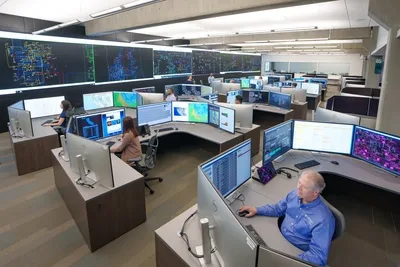
Steps we took to continue upgrading our control center, integrate new resources, reform the interconnection process, advance transmission upgrades and enhance our regional markets are among those that leave the ISO well positioned to meet future challenges for the public we serve.
The bulk electric system is at a pivotal point, with rapid technological change, significant investments in generation, storage, and transmission coinciding with rising demand and more frequent and extreme weather events.
The WEIM has been a success story for all of us in the region, building trust, saving billions of dollars in avoided production costs, and proving the value proposition of Western collaboration and a broad market footprint. By continuously demonstrating that customers benefit when the West stands together and collaborates to fulfill its obligations, the success of the real-time market has helped set the stage for the launch of EDAM and the momentum driving toward more robust markets that are independently governed.
At the ISO, we are proud to build on strong partnerships and staff expertise to deliver a more efficient and reliable electrical grid for California and the broader West. We are grateful to everyone who has helped make 2025 such a notable year and look forward to more progress in 2026 and beyond.
Thank you and best wishes for a healthy and joyous holiday season and a Happy New Year.